News
Gorenje with over 200 patents, wins national World Intellectual Property Organization award
14.10.2025
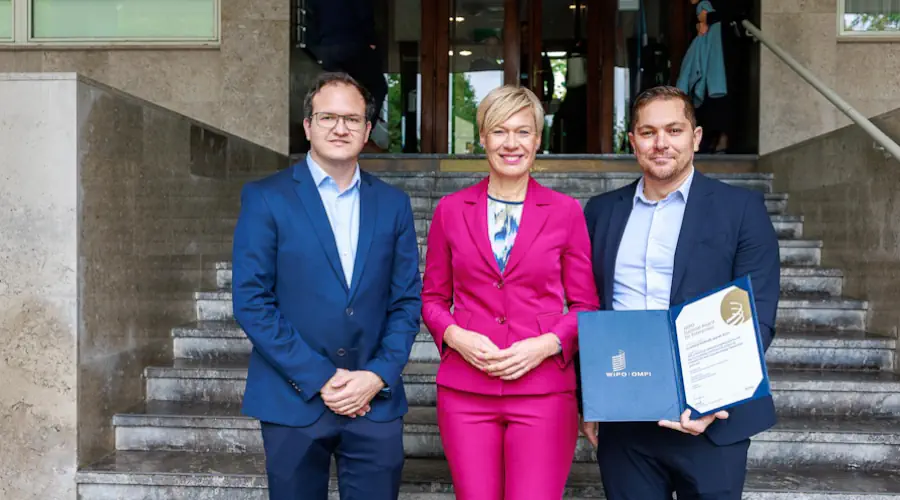
As the expert committee argued, Gorenje has managed to institutionalize innovation through a solid internal regulatory framework that ensures that employee creativity is encouraged, protected and rewarded. With a long-standing patenting tradition dating back to the 1970s, Gorenje has developed a comprehensive system for managing intellectual property rights, which promotes transparency in the submission of ideas and introduces strict evaluation mechanisms.
Equally important, according to the committee, is Gorenje's remuneration system, which also ensures fairness in collaborative projects, including those involving external partners. Such an approach strengthens innovation beyond the boundaries of individual organizations and reflects the company's openness to knowledge exchange. "Through continuous cooperation with Slovenian and international universities, Gorenje has established itself as a bridge between academic research and industrial practice, contributing to both the national and European innovation ecosystem. Its role as the central holder of industrial property within the Hisense Europe group further strengthens the company's strategic importance as a hub of technological progress," the World Intellectual Property Organization wrote in its statement.
With the WIPO National Award for Enterprises, the World Intellectual Property Organization encourages the strengthening of cooperation with public research organizations, while at the same time drawing attention to examples of good practices in the regular and methodological use of the intellectual property rights system in business activities.
"Gorenje has a long-standing tradition of innovation and patenting, which is also based on close cooperation with external educational institutions. In the last five years, we have successfully filed more than a hundred first-patent applications, which confirms our commitment to the development of advanced technologies and the protection of intellectual property,” said the Director of the Joint Development at Gorenje, Elvir Čaušević. “Our innovations come from combining the knowledge, experience and creativity of our employees and strategic cooperation with the academic environment. In this way, we strengthen our competitiveness on the global market and create sustainable solutions for the future.”
Gorenje's first patent recognized in 1956
Gorenje's first patent dates back almost 70 years, when the company was still a manufacturer of agricultural machinery at the beginning of its journey. In 1956, the first patent was filed, for a threshing machine, and today Gorenje confirms and protects its innovativeness with more than 200 valid patents and patent applications. Gorenje also still has the most patents registered in the register of the Intellectual Property Office of the Republic of Slovenia, out of all companies. Since we have been part of the Hisense Group, Gorenje has had the opportunity to use the knowledge protected by several thousand Hisense patents.
A complex path to a new product
In Gorenje, the procedures for developing new appliances, introducing changes and manufacturing appliances are very precisely defined and documented through regulations. For each new project, we conduct thorough research and determine the starting points for product and production technology, product design, marketing and sales strategy, taking into account consumer wishes, monitoring global trends and consumer wishes, which are analyzed through consumer research and targeted workshops with consumers, taking into account trends in the field of industrial design, product and production technologies, determining target markets and market segments where we want to sell, checking pre-development studies of development, design and technology, and conducting an analysis of the competition and their products across all professional fields.
Universities are strong development partners of Gorenje
Collaboration with faculties enables us to develop faster and eliminate potential problems already during the design of new products. To facilitate development cooperation, we signed an umbrella agreement on research and development cooperation with the University of Ljubljana a few years ago. We have signed long-term contracts with strategically important research groups whose knowledge and services we often need, and we cooperate with other groups in the implementation of individual activities lasting up to one year. We connect with faculties based on information about the quality of the research group and the equipment and programs they have. When deciding to cooperate, responsiveness, respect for agreed deadlines and experience are very important. We also occasionally cooperate with students in the topics of doctoral, master's and diploma theses.